Cryosphere: Where are worlds of ice at risk of thawing?
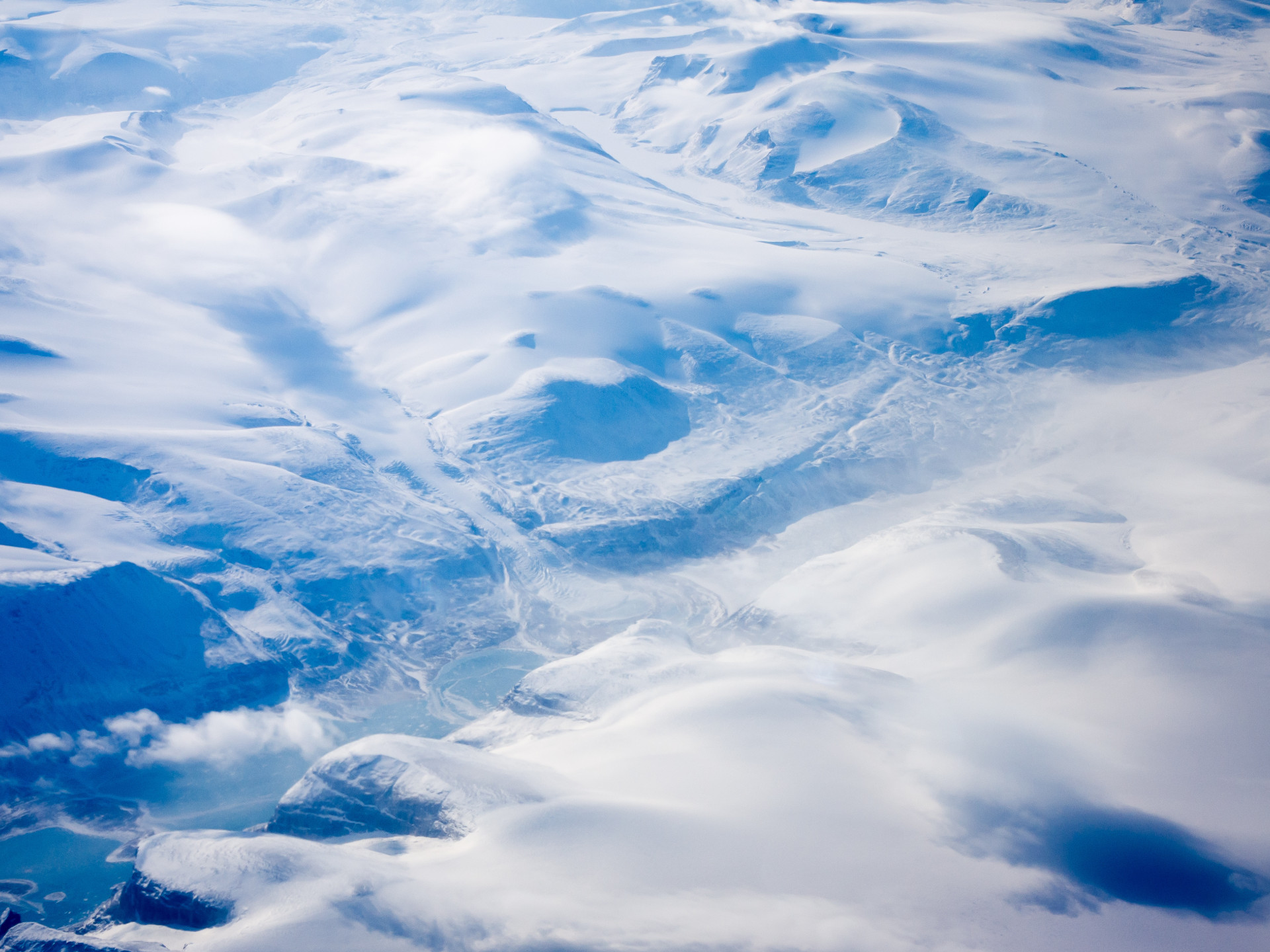
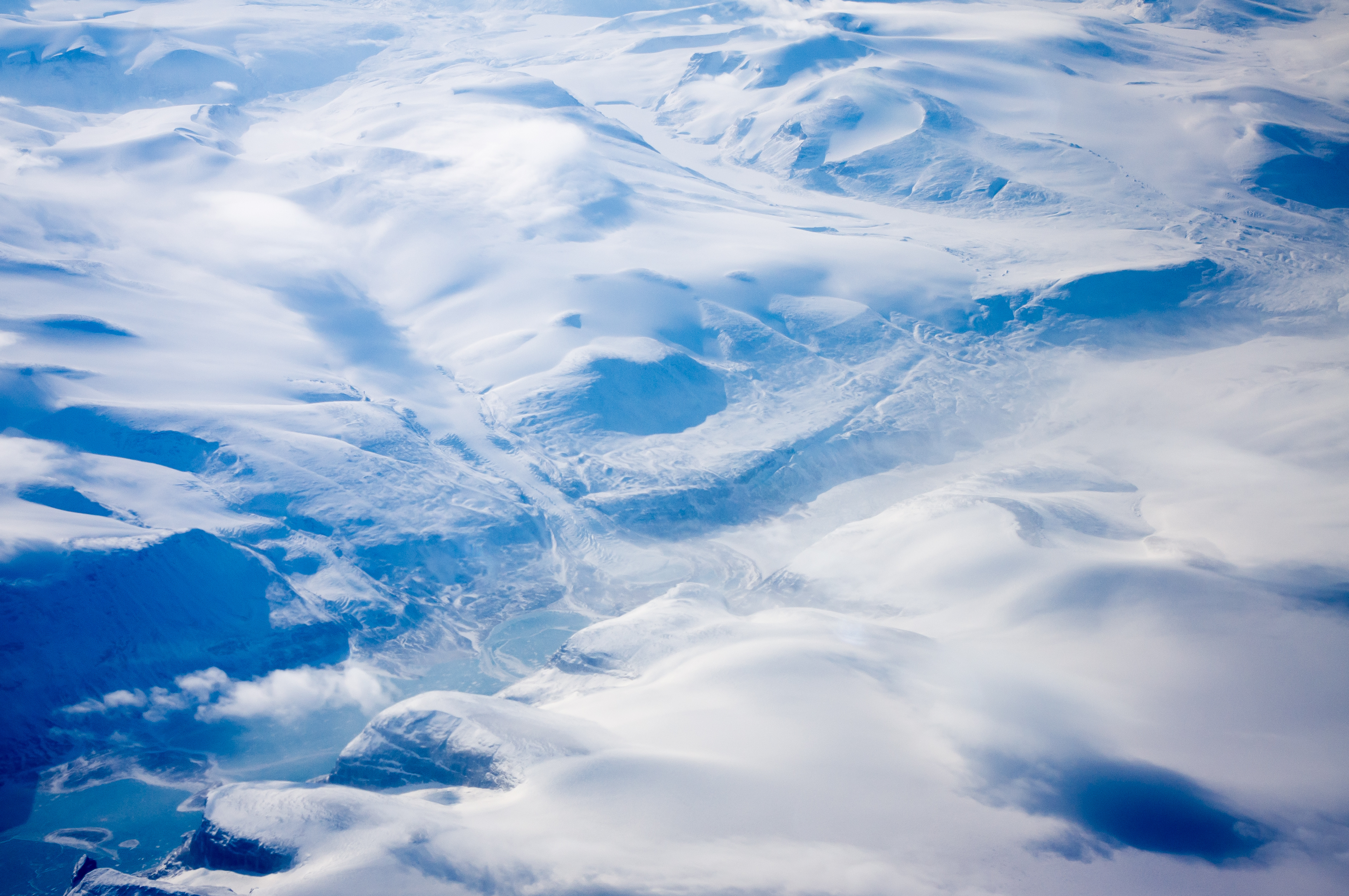
Worlds of ice help regulate the Earth’s climate, store freshwater, and support unique ecosystems of their own. Climate change is altering the dynamics of these frozen environments and, in many places, the lives of both people and wildlife.
Massive ice sheets, floating sea ice, glaciers, and permafrost all form part of the Earth’s cryosphere. The cryosphere plays an important role in regulating the global climate and water cycle. The vast ice sheets of Greenland and Antarctica, as well as sea ice, reflect some of the Sun’s radiation back into space, thereby reducing the amount of energy absorbed by the Earth. Glaciers cool their surroundings in a similar way. Glaciers and ice sheets also store nearly three-quarters of the Earth’s freshwater. Mountain glaciers serve as important seasonal and long-term water reservoirs. As temperatures rise in spring, they release valuable freshwater for plants and animals. The livelihoods of many people and agricultural practices around the world depend on these water reserves.
Deep permafrost helps stabilize landscapes in Arctic regions and acts as a barrier to near-surface water. Where it thaws, the ground can literally shift and collapse, threatening the foundations on which both people and ecosystems depend. Lakes and their winter ice cover, which provide an important source of drinking water in permafrost regions, are also threatened by these changes. In addition, frozen soils preserve enormous amounts of organic material from past plant and animal life. Rising temperatures allow microorganisms to break down these ancient carbon stores, releasing greenhouse gases such as methane. These emissions, in turn, contribute to further global warming.
Here, we describe several elements of the cryosphere that may shift into a new state as a result of global warming and reinforcing mechanisms once certain thresholds are crossed.
The island of Greenland extends from 60° to 83° north, from the North Atlantic to the Arctic Ocean. Parts of the island have been covered by ice to varying extents for more than two and a half million years. Over thousands of years, layer upon layer of snowfall has accumulated. The weight of newly fallen snow compresses the deeper layers into ice. This process has formed an ice sheet that today covers four-fifths of Greenland and is more than three kilometers thick at its highest points.
Scientists have been observing and measuring the ice sheet for more than a century. In 1930, an expedition led by polar researcher Alfred Wegener established the first permanently staffed research station in the middle of Greenland. Since then, researchers have drilled thousands of meters into the ice sheet to uncover its history stretching back through the millennia. Since the 1980s, satellite-based measurement techniques have made it possible to study ice-sheet dynamics in ever greater detail. Although they may appear static at first glance, ice sheets are constantly moving and changing. New snow accumulates at the surface year after year, while deeper layers are compressed into ice. At the same time, ice continuously flows outward from the center toward the coast. In several places, enormous streams of ice flow into the sea. Like rivers moving in slow motion, these outlet glaciers discharge into the ocean, where they melt and release ice that has been transported from the interior.
For decades, researchers have observed increasing ice loss, with more ice now being lost on average each year than is replenished by snowfall. Because temperatures in the Arctic are rising three to four times faster than the global average, increasing amounts of snow are melting even at higher elevations. Once the darker ice beneath the snow is exposed, an amplifying effect comes into play: the darker ice absorbs more solar radiation than a reflective layer of white snow and therefore melts more quickly. Algae can also grow on the ice and darken the surface further. The reflectivity, or brightness, of a surface is known as its albedo. This feedback process is therefore known as the ice–albedo feedback. Deposits of soot and fine particles from wildfires and industrial emissions, as well as the formation of meltwater ponds on the surface, can also reduce the albedo of the snow and further accelerate melting.
The ice sheet is thinning most rapidly around its margins. Here, another feedback mechanism accelerates ice loss: as the ice sheet becomes thinner, its surface drops into warmer layers of the atmosphere and melts even faster. At higher elevations, however, researchers measured increased snowfall in some areas between 2003 and 2019. This, too, is linked to Arctic warming: warmer air can hold and transport more moisture, leading to more frequent heavy precipitation. “The observed increase in ice-sheet elevation does not necessarily mean an increase in mass,” explains Ingo Sasgen, a glaciologist at the Alfred Wegener Institute. “A few years with slightly more snowfall are not necessarily significant for the overall mass balance of the ice sheet.” Ice losses around the margins are much greater in any case, and even a possible increase in mass in the interior would not be enough to offset them. Another problem is that precipitation is increasingly falling as rain rather than snow. “That does not contribute to the ice sheet’s mass balance, on the contrary, it reduces the surface albedo, causing the ice to melt more quickly.”
Researchers consider the Greenland Ice Sheet one of the tipping elements of the global climate system. Given current trends in average temperatures, continued melting cannot be ruled out even if global warming were successfully stabilized over the long term. Over thousands of years, Greenland could gradually become largely ice-free. This could raise global sea levels by more than seven meters. In addition, the freshwater released by the melting ice would alter regional and global ocean currents, with far-reaching consequences for the global climate.
The image of a polar bear on an ice floe has long been - and remains - an icon of climate change communication. As the Earth warms, polar bears are quite literally losing the habitat beneath their feet. Arctic sea ice, on which polar bears hunt and many seal species raise their young, has been declining in both extent and thickness for decades. By the middle of this century, the North Pole is expected to be ice-free during the summer months for the first time. During winter, too, an increasingly smaller area of the ocean surface freezes. Here, however, it is not primarily the extent of the ice but its thickness that is decisive. The ice is younger and less stable. Much of the sea ice that forms in the shallow marginal seas of the Arctic Ocean melts before it can even reach the central Arctic.
According to current findings, the trend is clear: the warmer it gets, the less ice forms in winter and the smaller the frozen area becomes in summer. In geographically constrained straits, the decline in sea ice is initially delayed. Where the ice lies over the open Arctic Ocean, more of it melts each year because it is exposed to warmer water. If the Earth were to cool significantly again in the distant future, the extent of sea ice would increase again as well.
Incidentally, Antarctic sea ice is also declining. Since around 2015, increasingly less sea ice has been forming in the Southern Ocean - a marked reversal of the trend seen in previous decades, when the total volume of annual sea ice had actually increased. Recent studies suggest that this decline may indicate an abrupt change in the Antarctic climate system.
The Antarctic Ice Sheet covers the Antarctic continent around the South Pole. It is considerably older than the Greenland Ice Sheet and much larger. It first became permanently established around 34 million years ago. Today, with an area of approximately 14 million square kilometers, it is around eight times the size of the Greenland Ice Sheet. At its thickest points, the ice is almost five kilometers deep.
East Antarctica makes up the largest part of the ice-covered southern continent, while West Antarctica and the Antarctic Peninsula extend to the west. East and West Antarctica are separated by the Transantarctic Mountains. The ice sheet can therefore be divided into three parts: the East Antarctic Ice Sheet, the West Antarctic Ice Sheet, and the ice-covered regions along the mountainous Antarctic Peninsula. These areas are currently being affected by global warming to different degrees, with changes in atmospheric and ocean temperatures playing different roles in different locations.
Large parts of the West Antarctic Ice Sheet lie below present-day sea level. The ice rests on the geological bedrock far below the water surface, with only a small part protruding above it. Numerous glaciers and ice streams carry ice toward the margins of the ice sheet and into the surrounding ocean. Still connected to the ice sheet, it floats on the ocean surface in the form of vast ice shelves. A large number of extensive ice shelves surround Antarctica. They fringe roughly half of the Antarctic Ice Sheet, holding back the ice flowing toward the coast and slowing its discharge into the ocean.
When the water beneath the ice shelves warms, however, the shelves begin to melt from below and become thinner. Their buttressing effect weakens, allowing ice to flow increasingly rapidly into the ocean. The faster the ice flows, the thinner the glacier becomes farther inland. Once the ice reaches a certain thickness, it loses contact with the underlying bedrock and begins to float. In this way, the ice sheet progressively detaches from the land beneath it and retreats inland from its margins. The boundary where the ice remains in contact with the bedrock is known as the grounding line. Warm ocean water follows the retreating grounding line. Retreat is particularly pronounced where the bedrock slopes downward toward the interior of the continent. In these areas, the ice sheet retreats into regions lying increasingly far below sea level.
Warmer water now melts more ice from below, while increasingly thick ice farther inland continues to flow toward the margins - accelerating both melting and ice transport. Ice flow speeds up as the grounding line retreats farther inland. This self-reinforcing process is known as marine ice sheet instability (MISI) and is a major concern for polar researchers. Model-based projections and paleontological evidence suggest that beyond a certain level of warming in the surrounding ocean, the process may become unstoppable. While the Greenland Ice Sheet is melting primarily because of rising air temperatures, Antarctic ice is particularly threatened by ocean warming and the resulting acceleration in the transport of ice toward the ocean. The West Antarctic Ice Sheet in particular, much of which rests on land below sea level, has been losing mass for decades. Even at current levels of warming, West Antarctica is considered especially vulnerable to long-term, self-reinforcing ice loss. If the ice shelves and the West Antarctic Ice Sheet were to melt completely, global sea level would rise by three to four meters. Ongoing ice loss also alters albedo, ocean temperatures, and ocean currents around and across the Antarctic continent. Entire ecosystems are coming under pressure as ice habitat disappears and water temperatures and nutrient levels change. These effects are felt throughout marine food webs and coastal ecosystems around the world.
Most of the East Antarctic Ice Sheet rests on the continent above sea level. However, it too has vulnerabilities to ocean warming: extensive basins lying below sea level. These include the Wilkes, Aurora, and, farther west, Recovery basins. Using satellite observations and measurements from probes, researchers are observing warm seawater penetrating into some of these depressions.
The Greenland, West Antarctic, and East Antarctic ice sheets are considered core tipping elements of the global climate system. While Greenland and West Antarctica are already sensitive to current temperatures, a complete collapse of the East Antarctic Ice Sheet would likely occur only under sustained global warming of around 5°C above preindustrial levels. According to model calculations, it would take more than ten thousand years for all of East Antarctica to become ice-free. Some of the low-lying basins of East Antarctica, however, are considered unstable at around 2°C of warming and could become ice-free over the long term if this threshold were exceeded. The East Antarctic Ice Sheet could then retreat over many thousands of years, considerably more slowly than the ice sheets of West Antarctica and Greenland. The entire East Antarctic Ice Sheet contains enough ice to raise global sea level by approximately 52 meters. Individual basins each account for several meters of that total. Complete melting would profoundly alter the climate and ecosystems of Antarctica and far beyond.
The effects of global warming are becoming increasingly apparent even in the world’s cold, high-altitude regions. Mountain glaciers, which occur at high elevations on almost every continent, have been losing mass worldwide since the late 19th century. This loss has accelerated significantly since the 1990s. In September 2025, the Watzmann in the Berchtesgaden Alps made troubling headlines when the Ice Chapel, a famous formation in the glacial ice, collapsed. Winters with little snow and hot summers had weakened the structure considerably in recent years.
Many glaciers are affected by reinforcing mechanisms such as the relationship between ice thickness and elevation: as a glacier becomes thinner, its surface drops into progressively warmer layers of air, further accelerating melting. If winter snow melts early in the year or precipitation increasingly falls as rain rather than snow, darker ice is exposed. It absorbs more radiation than snow, accelerating the melting process. Sun-warmed rock and debris can intensify this effect locally. A thin layer of debris on the surface can also promote melting. These effects are similar in different regions of the world and are occurring simultaneously as temperatures rise. “If there are no longer any areas at high elevations that supply the glaciers farther downslope with ice, they are irreversibly lost on human timescales,” says glaciologist Ingo Sasgen. Glaciers support unique ecosystems and serve as important seasonal and long-term water reservoirs for both people and nature. As glaciers shrink, the habitats of many animals and plants change, and species are lost. Water resources and the freshwater supply for many people around the world are at risk.
Permafrost refers to ground that remains permanently frozen for several consecutive years. Permafrost covers roughly one-sixth to one-fifth of the land area in the Northern Hemisphere. It is found primarily in Russia, but also in Canada, the United States (Alaska), Norway, Greenland, and on the Tibetan Plateau. The layers closest to the surface, known as the active layer, generally thaw during the warmer months of the year. Beneath them, the ground can remain frozen to depths of several hundred meters depending on the region, and to as much as 1,500 meters in central Yakutia.
Permafrost responds very differently to warming depending on the characteristics of the underlying ground. At local and regional scales, researchers are observing signs of abrupt thaw. Where large masses of ice are embedded in the ground - in cavities or as wedge-shaped bodies within cracks - the surface can subside dramatically as the ice melts. This creates an uneven landscape of trenches, ponds, and large lakes. Because accumulating surface water transfers heat into the ground, it accelerates permafrost thaw. In some parts of Siberia, such sudden changes are already creating major challenges for people and entire ecosystems. As temperatures rise, abrupt landscape change is becoming more likely in individual regions. Researchers estimate that such self-reinforcing processes could occur across one-fifth of Arctic permafrost areas.
Other areas thaw gradually, with the depth of thaw increasing as global temperatures rise. Viewed globally, permafrost thaw is progressing roughly in step with climate change, even though it can occur abruptly in some locations. Summers are becoming longer, and winters are not always cold enough for the active layer to refreeze completely. Whether thawing occurs abruptly or gradually, it initiates the decomposition of plant material that had been preserved by the permanently frozen ground. This releases carbon dioxide as well as methane, which in turn intensify the greenhouse effect. This feedback is known as the permafrost carbon–climate feedback. The upper three meters of vulnerable permafrost alone contain more carbon than the entire present-day atmosphere. Microbial decomposition also warms the ground and could further accelerate thawing. However, it remains uncertain how strong this feedback will ultimately be and over what timescales the thaw will progress. Taken together, current evidence suggests that, at the global scale, permafrost thaw will broadly track rising temperatures. Researchers consider an abrupt, unstoppable thaw of permafrost worldwide relatively unlikely. If it were to occur, however, northern permafrost regions would thaw much more rapidly than the ice sheets described above. They could be irreversibly lost over periods ranging from a few decades to several centuries.
These examples from the cryosphere show that the Earth’s frozen environments are important habitats, help regulate the global climate, and form essential parts of the freshwater cycle. Rising temperatures worldwide threaten their stability, and in some places they are at risk of being irreversibly lost. Only decisive action to reduce greenhouse gas emissions now can help preserve these vulnerable worlds of ice.
Scientific review and consultation:
- Dr. Klaus Grosfeld, Alfred Wegener Institute, Helmholtz Centre for Polar and Marine Research
- Dr. Ingo Sasgen, Alfred Wegener Institute, Helmholtz Centre for Polar and Marine Research
- Dr. Josefine Lenz, Alfred Wegener Institute, Helmholtz Centre for Polar and Marine Research
- Dr. Marcel Nicolaus, Alfred Wegener Institute, Helmholtz Centre for Polar and Marine Research
Expertise